


President of Pardis Technology Park Outlines 25-Year Journey from Raw Land to International Innovation Hub
From Raw Land to Global Model: President of PTP Shares Blueprint for Tech Ecosystem Development
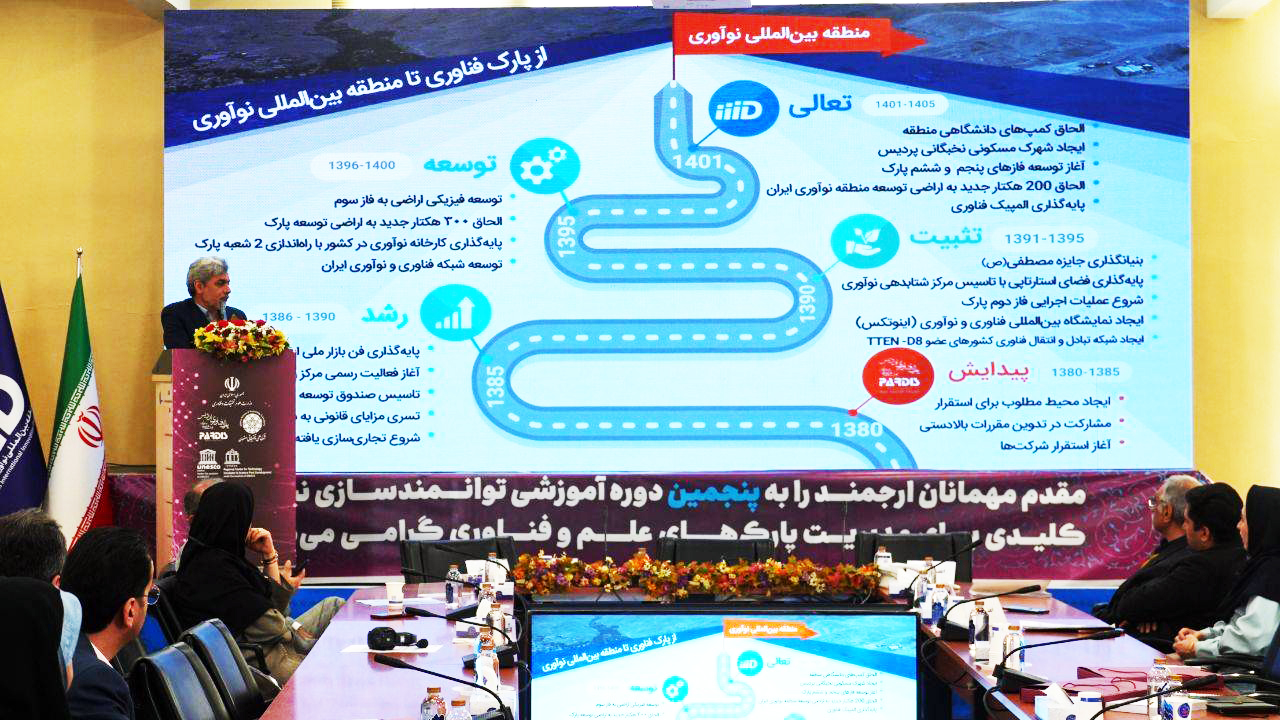
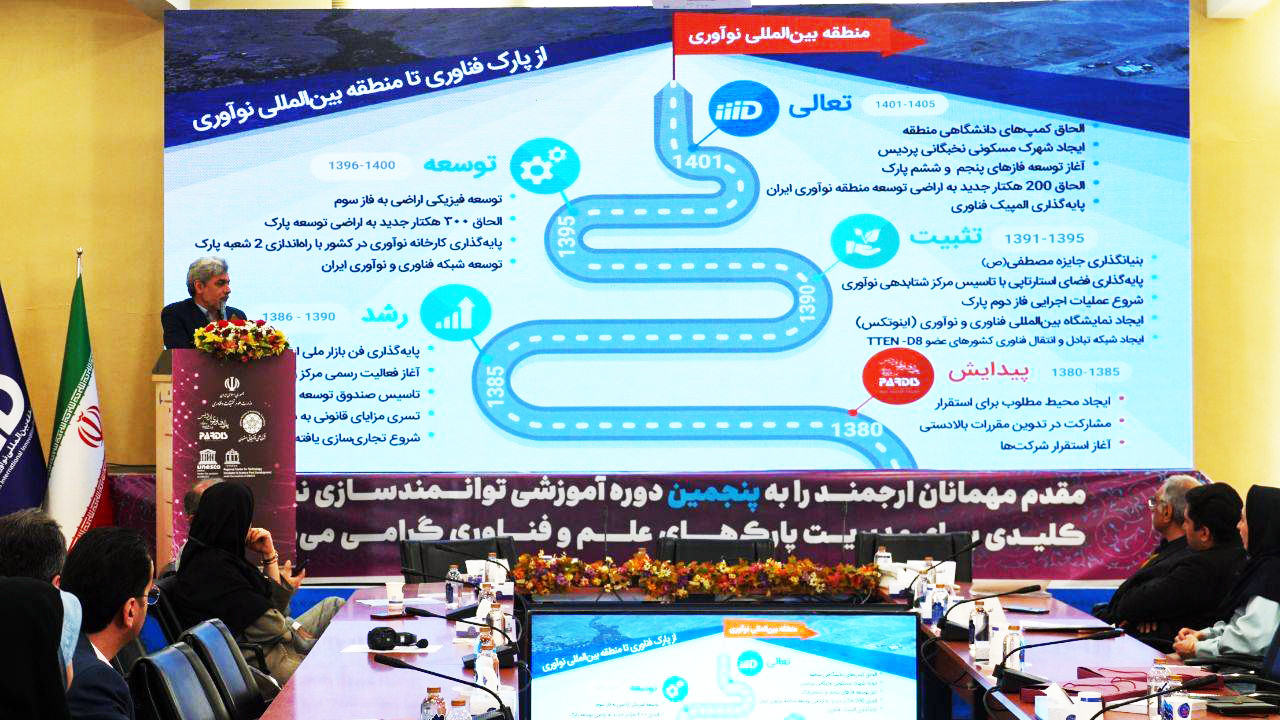
The President of Pardis Technology Park (PTP) has detailed the 25-year evolution of the park from a raw piece of land into a national model for innovation mainstreaming, technology development, and international trade. Mehdi Safarinia made the remarks at the 5th empowerment course for science and technology park managers, held at PTP.
Addressing an audience of managers sharing common concerns, Safarinia emphasized the value of such gatherings for synergy and mutual learning. He recounted the park's origins, noting that the land was acquired in 2001 (1380 solar) and initial studies were conducted with pioneers in the country's technology sector.
According to Safarinia, alongside the park's physical establishment, efforts were simultaneously directed toward drafting regulations for science and technology parks and creating legal incentives—moves that significantly contributed to the development of Iran's innovation ecosystem.
Land allocation began in 2001, with the first companies settling in 2006. "From 2007 onwards, software and infrastructure activities expanded," Safarinia stated. "Subsequently, with the acquisition of legal permits and the stabilization of tax incentives, the path for commercializing technologies was paved."
He identified several key milestones in this trajectory:
- Launching the INOTEX International Innovation and Technology Exhibition in 2013
- Developing acceleration centers and co-working spaces
- Establishing innovation factories
- The Mustafa Prize (PBUH), which emerged from this very ecosystem as one of the country's most significant scientific mainstreaming initiatives
Safarinia also highlighted the park's physical expansion, with over 200 hectares added to its land in recent years. Plans are underway to develop residential networks and enhance the quality of company settlement.
The PTP President outlined the park's four core missions: scientific mainstreaming, innovation and entrepreneurship development, technology trade, and international networking. "We have strived to leverage legal and governmental capacities to strengthen the country's parks," he added.
Key policy achievements resulting from persistent advocacy include:
- Securing a share of value-added tax for parks as a sustainable revenue source
- Pursuing tax exemptions on employee salaries
- Issuing property ownership documents for companies
- Establishing specialized dispute resolution mechanisms
- Seeking tax exemptions for government aid to knowledge-based companies
Concluding his remarks, Safarinia stressed the importance of synergy among Iran's science and technology parks. "Our goal is to elevate the position of parks in the knowledge-based economy and transform them into the main drivers of technology development in the country. Holding these empowerment courses is a step in that direction," he stated.
Quick Access

Address: Pardis Technology Park, 20th km of Damavand Road (Main Stresst), Tehran I.R. Iran.
Postal Code: 1657163871

Tel: 76250250 _ 021
Fax: 76250100 _ 021
E-mail: info@techpark.ir
website:iiid.tech
Partner Organizations