


Deputy Minister Stresses Need for National Networking to Solve Country's Problems
Research Deputy: Iran's Tech Parks Risk Stagnation Without Deep University Ties
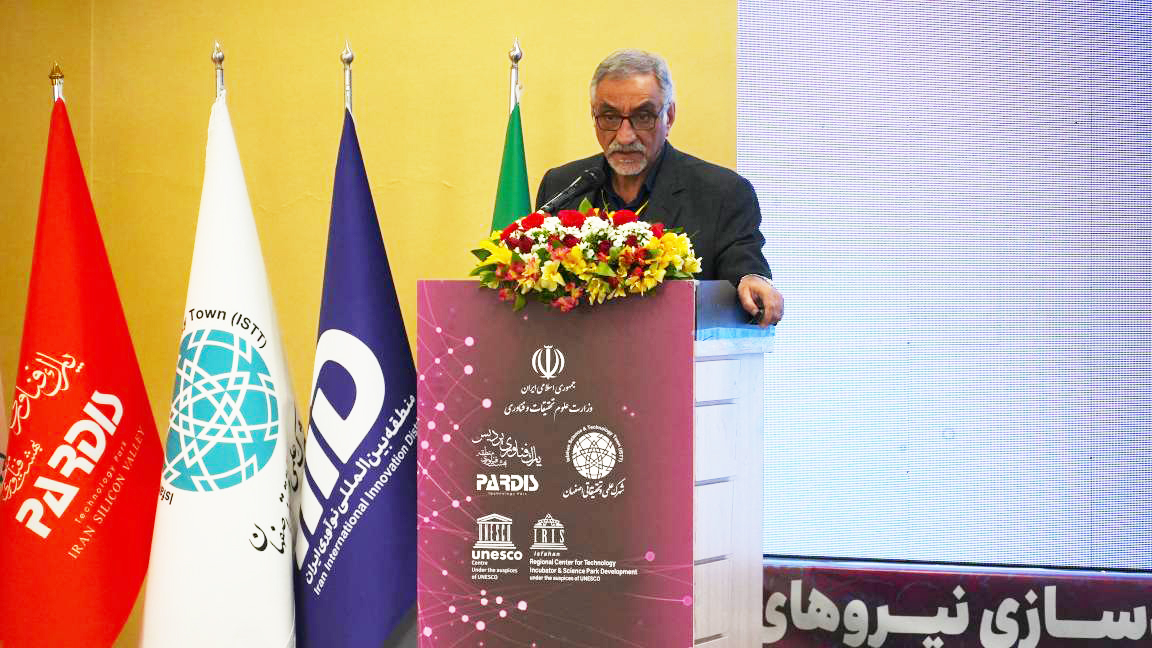
The Acting Deputy Head of Research at Iran's Ministry of Science, Research and Technology has warned that the nation's science and technology parks risk losing their innovative edge if they fail to maintain strong ties with universities. Speaking at the 5th empowerment course for tech park managers at Pardis Technology Park (PTP), Seyed Mehdi Abtahi emphasized that universities and faculty members are the primary wellspring of innovation.
Dr. Abtahi addressed structural challenges in Iran's research landscape, distinguishing between "individual-based" and "structured" technological activities. He noted that while many university-industry connections are built on valuable individual initiatives by faculty members, this approach lacks sustainability and systemic integrity. He pointed out that a significant portion of over 13,000 university-industry contracts in the country are based on personal relationships rather than institutional frameworks.
The Deputy Minister highlighted persistent issues in demand-driven research, including fragmentation, weak networking, and ambiguities over intellectual property (IP) rights. "In many projects, a continuous research line fails to form, and outcomes stall at low technology readiness levels. Furthermore, the issue of IP rights and benefit-sharing remains an unresolved challenge," he stated.
Drawing on international experiences, Dr. Abtahi pointed to successful policy and research management models in leading countries. "In successful global examples, from macro-policy levels to project implementation, clear, mission-oriented, and accountable networks have been established—structures that both manage the risk of failure and clarify IP ownership and the exploitation of results," he explained.
He argued that to overcome existing fragmentation in Iran, independent, output-oriented, and networkable research nuclei must be formed. These entities would be capable of breaking down the country's major problems into assignable projects and achieving results through a national division of labor.
Reinforcing the university's role as the cradle of innovation, Dr. Abtahi warned, "If the link between technology parks and universities weakens, the quality of inputs to tech companies will also decline. University professors and laboratories are the primary feeders of parks and must be properly supported."
He called for defining appropriate performance indicators for faculty members engaged with industry, stating that as much effort as is put into market development, exports, and solving insurance and tax issues for park-based companies, equal investment and planning should be dedicated to strengthening scientific and research inputs.
Concluding his remarks, Dr. Abtahi emphasized that "innovation, in the absence of cohesive and convergent networks, weakens before reaching the market. If convergence is achieved among the university, the park, and industry, not only the main target market but also adjacent markets will become accessible."
Quick Access

Address: Pardis Technology Park, 20th km of Damavand Road (Main Stresst), Tehran I.R. Iran.
Postal Code: 1657163871

Tel: 76250250 _ 021
Fax: 76250100 _ 021
E-mail: info@techpark.ir
website:iiid.tech
Partner Organizations