
- District
- Membership
- Services and Support
- News and Events
EN
Iranian MP Highlights Financial Boost for Innovation Ecosystem at INOTEX 2025 Lead
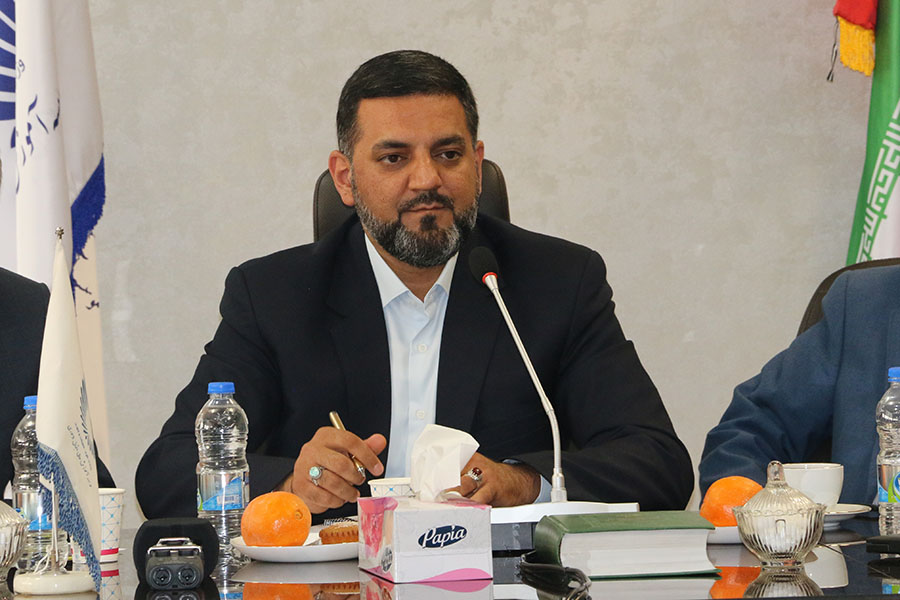
Tehran, May 9, 2025 – A member of Iran’s parliament revealed that 240 trillion Iranian Rials (IRR), originally projected as revenue under the Knowledge-Based Production Leap Law, have been fully allocated to support knowledge-based companies, marking a significant step forward for the country’s innovation ecosystem.
Ehsan Azimi Rad, a representative in the Islamic Consultative Assembly, spoke at the INOTEX 2025 Governance and Legislation Forum on the topic of “The Role of the Innovation Ecosystem in Addressing National Challenges.” He emphasized the critical need to focus on science, technology, and innovation to assert Iran’s position on the global stage against dominant powers. “These fields are of paramount importance, enabling us to achieve our rightful place in the world,” he stated.
Describing the process of knowledge creation, technology development, and wealth generation as complex yet invaluable, Azimi Rad noted, “The Supreme Leader has repeatedly stressed the importance of these priorities. As officials, it is our duty to recognize these capacities and act accordingly in our respective roles.”
Citing recent remarks by the Supreme Leader during a meeting with system officials, the MP highlighted three key managerial traits—transformation, risk-taking, and persistent follow-up—as vital. He warned, “Unfortunately, the absence of these qualities has become a serious issue for the country. Many senior managers lack such a spirit, leading to stagnation in the interaction between industry and knowledge-based companies.”
Azimi Rad, spokesperson for the parliamentary Education Committee, pointed to the establishment of the “Committee on Knowledge-Based Economy and Oversight of the Leap Law” in the 12th term of parliament. “While Iran faces no shortage of progressive legislation, the real challenge lies in implementation. This committee, through oversight of the Leap Law’s execution and necessary amendments, has driven significant changes in governance systems,” he explained.
Recalling the Supreme Leader’s recognition of the Knowledge-Based Production Leap Law as one of the country’s top three laws, he added, “The committee meets weekly with representatives from the Vice Presidency for Scientific, Technological and Knowledge-Based Economy Affairs, the Court of Audit, the Planning and Budget Organization, ministries, and related bodies. The law’s two main pillars are ‘institutional obligations’ and ‘revenue sources,’ with the latter facing implementation challenges.”
Detailing the financial aspects, Azimi Rad said, “In 2023, only 16% of the legal resources—40 trillion IRR out of 240 trillion IRR—were realized due to weak oversight. However, this year, through relentless follow-up, the full 240 trillion IRR, along with 32 trillion IRR of overdue claims under Article 16 of the Leap Law (out of a 60 trillion IRR commitment from the Ministry of Energy), have been deposited. This achievement represents a major stride in supporting knowledge-based firms.”
In closing, he announced substantial investments by the Vice Presidency in developing artificial intelligence infrastructure, revealing that advanced systems based on specialized hardware (GPUs) will soon be unveiled in this domain.
TIM 2022
The first steering council meeting of TIM 2022 was held
Secretary General of D8 Organization said:
Using Update Technologies is the Only Way to Achieve Sustainable Economic Growth in D8 Development
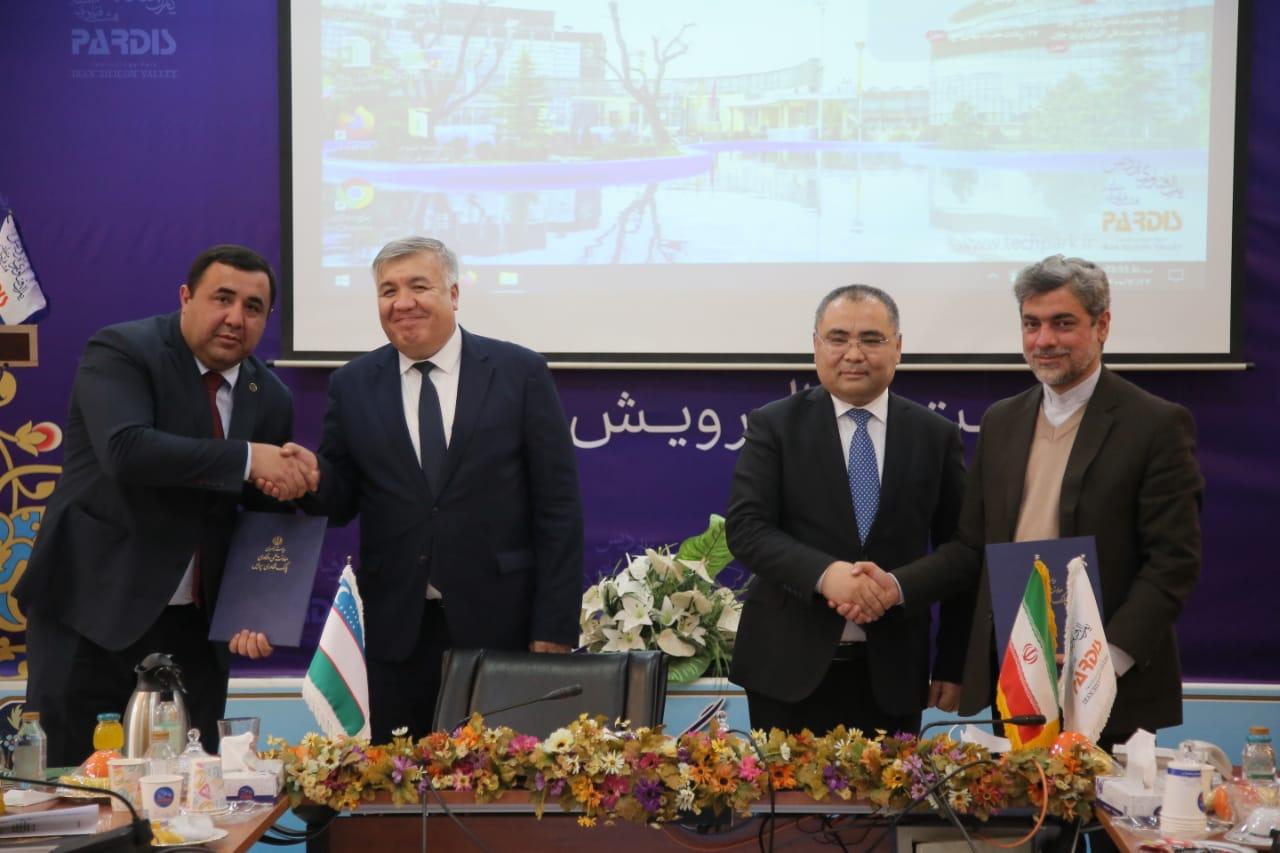
Aiming to develop Iran-Uzbekistan cooperation
Pardis Technology Park, Yashnabad Technology Park Ink Mou on Technological Cooperation
Along with unveiling of 5 pharmaceutical products of a member company of Pardis Technology Park;
Iran’s President visits Pardis Technology Park