


Technology will shape Iran’s economic future, says Hojatollah Seydi, as Iran International Innovation District (IIID) and the capital market enter a new financing era
IIID and The Capital Market Take A Major Step Into A New Phase Of Financing Knowledge-Based Enterprises
-
A joint session of investment firms, senior capital market officials, and IIID focused on strengthening ties between the knowledge-based economy and the capital market, paving the way for structural and financial cooperation to boost Iran’s innovative firms.
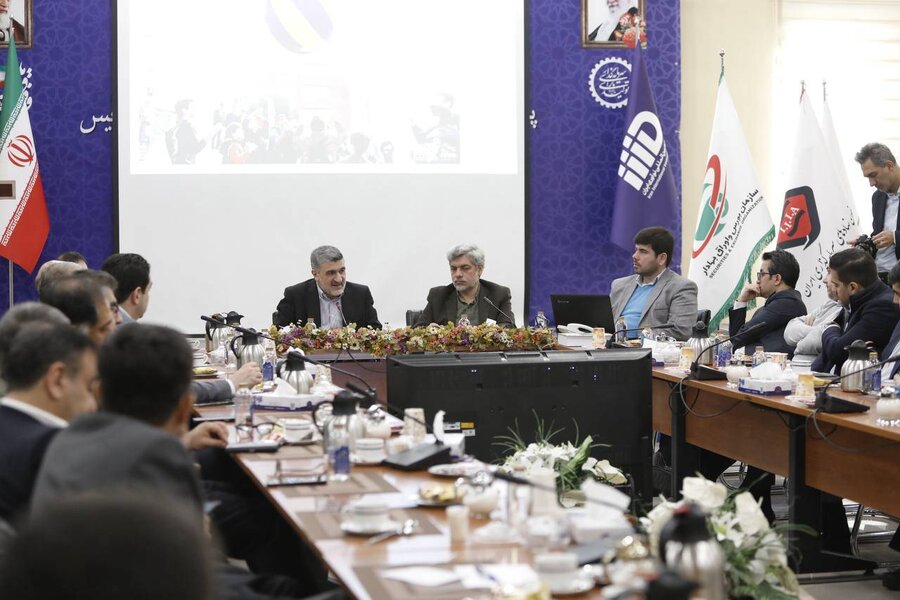
A joint meeting of venture capital firms, the CEO of the Iran Fara Bourse, senior capital market executives, and IIID (the Iran International Innovation District) with a focus on strengthening the link between the knowledge-based economy and the capital market was held. The gathering underscored the transformative role of technology in Iran’s economic future and paved the way for a new phase of structural and financial cooperation to support the country’s innovative companies.
The session featured Hojjatollah Seydi, President of the Securities and Exchange Organization (SEO); Mehdi Safari-Nia, President of Pardis Technology Park; Mohammad-Ali Shirazi, CEO of the Iran Fara Bourse (IFB); and Rasoul Saadi, Secretary General of the Iranian Investment Institutions Association, among other capital market leaders. The meeting is a joint step between the capital market and the country’s technology ecosystem to develop innovative financial instruments, facilitate the entry of knowledge-based companies into the stock market, and deepen fintech.
The future of Iran’s economy hinges on technology. Seydi emphasized the strategic role of technology in the country’s economy, noting that reliance on traditional reserves no longer yields a lasting competitive edge. He stated that the regulator must support the innovation ecosystem and that advancing the knowledge-based economy is impossible without strengthening the commercialization link. He cited Pardis Technology Park as a successful model and warned that many good ideas stall at the commercialization stage; strengthening this link would unlock national growth.
A leap in collaboration between IIID and the capital market followed, as Safari-Nia highlighted that cooperation with the stock exchange goes back more than 15 years, leading to the creation of a market for intellectual property. He added that the number of knowledge-based companies has surpassed 10,000, and last year government action elevated IIID to focus more on fintech and the investment chain in this area. The region hosts fintech companies active in payments, crypto assets, and financial software, and closer cooperation with the Central Bank, banks, and the capital market is essential. Both sides need each other: tech companies require a market for financing, and the market needs diversified instruments to support innovation. This bilateral cooperation could become a national program.
Shirazi later noted that the NovaAfarin Market has received 38 applications so far, with 30 files nearing finalization, and about 20% of knowledge-based companies are active there. The market’s performance has been positive, with four active NovaAfarin tickers delivering higher returns than the market average. Yet the main challenges remain the shortage of ready projects and limited linkage between companies and the capital market. He stressed that VC funds have ample resources, but investable projects are scarce. Currently, 27 VC funds are active, but only IRR 18 trillion of IRR 25 trillion committed has been utilized. IIID can help close this gap by readying companies for funding.
Ali Asgari urged the development of modern financial instruments—gold-based funds, crypto-based instruments, and export-support mechanisms—to unlock bottlenecks in the knowledge-based economy. He noted that as neighbors progress, the gap becomes more painful, and only a combined effort across industry, production, and technology can bridge it.
The visit to IIID’s development phases, the permanent exhibition of domestically manufactured medical equipment, and a local dialysis device manufacturer was also on the agenda.

Quick Access

Address: Pardis Technology Park, 20th km of Damavand Road (Main Stresst), Tehran I.R. Iran.
Postal Code: 1657163871

Tel: 76250250 _ 021
Fax: 76250100 _ 021
E-mail: info@techpark.ir
website:iiid.tech
Partner Organizations